The Salt Line: Cornwall’s Lithium Ambition and the Rivers That Would Pay for It
Photo: don cload , CC BY-SA 2.0, via Wikimedia Commons
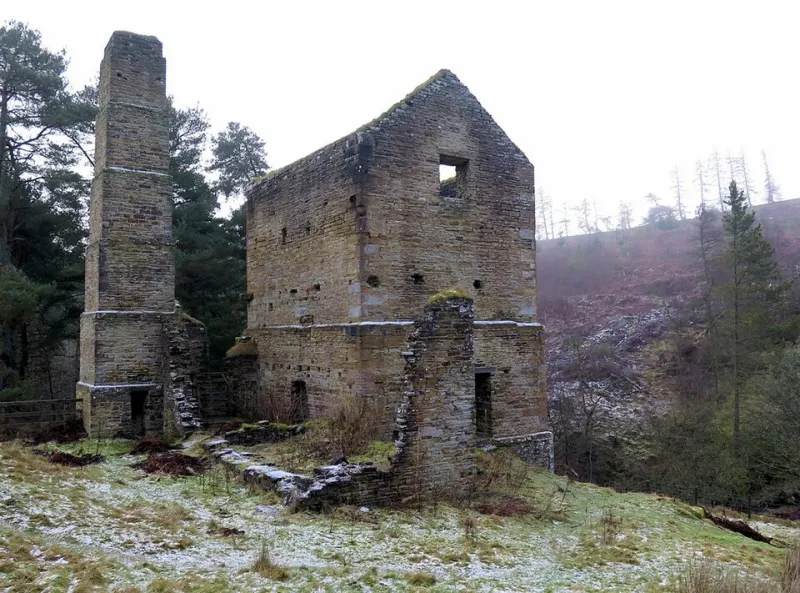
Cornwall has been here before. The county’s mining history is written in engine houses, adits and the slow recovery of streams that once ran orange with mineral drainage. The lithium question now arriving in the Fal and Tamar catchments is different in technique and scale, but it carries an old demand: that a resource boom should not leave the water to settle the bill.
As 2026 draws towards its close, lithium extraction from Cornish geothermal brines is moving from trial to the harder terrain of commercial permitting. The promise is substantial. Geothermal wells can produce heat and power while yielding a mineral-rich brine; selective extraction could turn a waste stream into a domestic supply of lithium for batteries and grid storage. For a region chasing green industry, the logic is attractive. For the rivers that thread through the same landscape, the logic is not yet complete.
From pilot to permit
The shift from demonstration to deployment changes the nature of the environmental conversation. A pilot plant can be monitored as an experiment. A permitted facility must be judged as infrastructure: abstraction volumes, discharge quality, chemical handling, transport, land take and cumulative effects all become part of a public record.
That record is still being assembled. Operators have published technical updates on brine processing and resource estimates, and Cornwall’s planning and environmental regulators have been drawn into pre-application discussions. But the evidence base that matters most to the Fal and Tamar is not the headline lithium yield. It is the water balance. How much brine is drawn? What is returned, at what temperature and with what chemistry? Where are the spill risks? And who is watching the receiving waters over the years, not merely the weeks of commissioning?
These are not objections to lithium extraction in principle. They are the conditions under which a strategic green industry can be judged fairly. The absence of clear answers would be the problem.
What brine leaves behind
Geothermal brines are not simple salt solutions. They can contain lithium, but also sodium, calcium, potassium and trace metals, depending on the geology and the circulation system. The extraction process is designed to selectivity recover the target mineral, yet selectivity at the plant does not remove the need to manage everything else. Spent brine, cleaning chemicals, thermal discharge and site drainage all require controlled pathways.
The Fal estuary is a particularly sensitive receptor. Its mudflats, saltmarsh and shellfish waters are protected under conservation designations, and its mixing regime is complex. The Tamar is similarly varied: a working river, a recreational asset and a catchment with agricultural pressures already in play. Neither system is a blank canvas onto which a new industrial water cycle can be projected without site-specific evidence.
Anglers will notice changes first. They tend to speak of the small signals: silt plumes after heavy rain, unusual colour, reduced insect life, a shift in where fish hold. Farmers will notice different signals: abstraction pressure in a dry spring, or the reputational risk attached to produce grown near an industrial site. Regulators will see licence conditions, monitoring returns and incident reports. A credible permitting process should make those three views legible to one another.
The catchment ledger
Cornwall’s mining past offers a cautionary accounting. The Wheal Jane incident of 1992, when mine water escaped into the Fal system, became a benchmark for why closed and working mineral sites require long-term water management. Modern lithium projects are not replicate that legacy, and it would be lazy to imply they will. But the comparison explains local vigilance. Communities that have lived with the downstream consequences of extraction are entitled to ask what has changed.
What has changed, in principle, is the regulatory toolkit. The Environment Agency can attach abstraction and discharge conditions. The mineral planning authority can require monitoring and restoration bonds. Catchment partnerships and citizen scientists can add independent data. The question is whether those instruments are being used in a joined-up way, and whether the monitoring is designed before the first commercial volumes are processed rather than after.
A strategic industry should be able to answer a simple question: what will the river look like in ten years if this succeeds? That requires baseline data, transparent reporting and agreed thresholds for action. It also requires a honest assessment of cumulative effects. One facility may be manageable. Several, clustered in the same catchment, may not be.
Consent as a public contract
Permitting is often presented as a technical exercise. In practice it is a public contract. When a company receives a water abstraction licence or a discharge consent, it receives a limited right to use a shared resource. The conditions attached are the terms of that contract, and they should be readable by the people who live downstream.
That means publishing monitoring data in a form that anglers, farmers and parish councils can use. It means explaining how abnormal events will be reported. It means being clear about who pays for long-term monitoring if a site changes hands or closes. And it means regulators having the capacity to inspect, not merely to process applications.
None of this is beyond reach. Cornwall has strong environmental expertise, active catchment groups and a public that understands mining landscapes. The lithium transition could demonstrate that a green industry can be held to a higher water standard than its predecessors. But that outcome will not arrive automatically. It will be built from consent conditions, baseline surveys and the willingness of operators to treat the catchment as a partner rather than a boundary condition.
The test ahead
As 2026 closes, the Fal and Tamar are not yet casualties of a lithium boom, nor are they guaranteed beneficiaries of one. They are the places where the claims will be tested. The county’s newest mineral story will be judged less by the purity of its lithium product than by the clarity of its water ledger.
A strategic green industry should welcome that scrutiny. If Cornish lithium cannot keep the rivers off the balance sheet, it will struggle to convince anyone that it belongs in the South West’s low-carbon future. If it can, it may yet show that the region has learned how to take something from the ground without leaving the water to carry the cost.