Light Share: Can Raised Solar Arrays Keep Somerset’s Cider Orchards in Business?
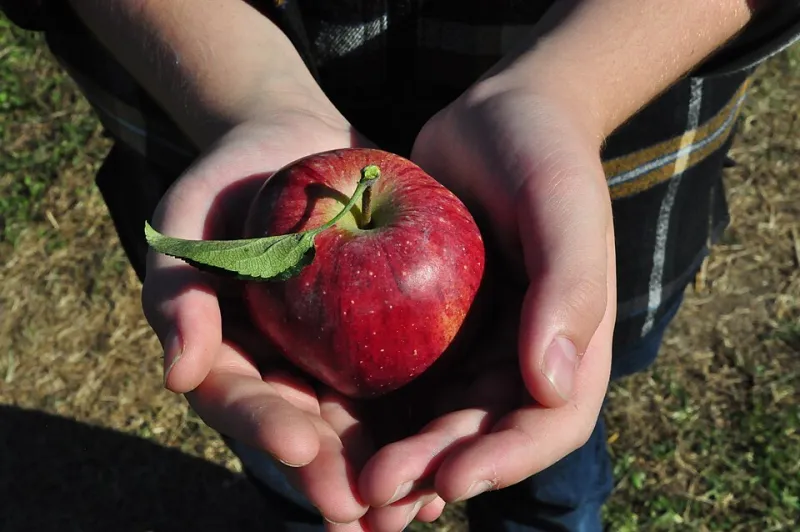
Photo: Tom Shockey, CC BY 2.0, via Wikimedia Commons
Somerset’s cider orchards are more than a crop. They are a landscape signature, a tourism draw and a store of local knowledge about varieties, pruning and the awkward business of making a living from apples. Yet the economics have become harder to balance. Labour costs have risen, harvests are more variable, and landowners are increasingly approached by renewable energy developers looking for open, well-connected land. Into that tension comes agrivoltaics: the practice of raising solar panels above agricultural production so that land can, in theory, do two jobs at once.
Why orchards are on the solar map
On paper, orchards look like plausible candidates for dual-use solar. They are already managed as permanent crops, with defined rows and machinery routes. Many are on farms that have diversified before. Solar developers, meanwhile, are under pressure to find sites that do not trigger fierce objections about taking good farmland out of food production. A raised array over an orchard appears to offer a compromise: electricity generation alongside an existing agricultural enterprise.
The reality is more complicated. Apple trees are not a low-growing salad crop. They need light, airflow and access for pruning, spraying and harvesting. Panels that are too low or too dense will shade the canopy, reduce fruit set and complicate management. Cider apple varieties also vary in vigour and disease pressure, so a design that works in one orchard may fail in another. The question is not whether panels can be installed above trees, but whether the resulting light, water and microclimate can support a commercially viable harvest.
What the trials are testing
A cluster of demonstration plots in Somerset is beginning to generate local evidence. The trials are examining panel height, row spacing and orientation, with particular attention to how light is distributed across the orchard floor and canopy. Some designs use fixed, elevated structures; others test tracking systems that follow the sun. Researchers and growers are monitoring apple yield, fruit quality, disease incidence and soil moisture, as well as the practicalities of getting tractors and picking teams through the site.
Pollinators are a central part of the picture. Orchards depend on insects, and solar farms can, if managed well, provide floral resources and nesting habitat. But panels can also alter wind patterns, temperature and rainfall reaching the ground. Early indications from similar projects elsewhere suggest that careful design can reduce some stress on crops, particularly in hot, dry summers. The Somerset trials are asking whether those benefits are real for cider apples, and whether they outweigh the cost and complexity of the mounting structures.
The economics are equally important. Agrivoltaic installations are more expensive to build than conventional ground-mounted solar because the panels must be higher, spaced more widely and engineered to withstand wind loads over machinery. That capital cost has to be recovered from electricity sales, reduced farm energy bills or a lease arrangement with a developer. For a cider orchard with thin margins, the difference between a modest rent and a genuine dual income can determine whether the idea spreads.
The planning and grid questions
Even if the agronomy works, the rules may not. In England, larger solar schemes are decided through the planning system, where councils must weigh energy generation against the loss of agricultural land. Agrivoltaics does not yet have a clear policy category. Is it agriculture with a renewable add-on, or renewable energy with an agricultural veneer? That ambiguity matters for permitted development rights, land classification and the evidence applicants are expected to provide.
Grid connections are another constraint. Rural parts of Somerset and neighbouring counties have faced long queues and costly reinforcement for new generation. A cluster of small orchard-scale arrays may not justify the connection upgrades that a larger solar farm would trigger, but shared connections and battery storage could change the calculation. So too could reforms to the connection queue, which are intended to prioritise projects that are ready to build.
Land use is the third pressure point. The best cider orchards often sit on land that is also attractive for solar because it is relatively flat and accessible. Planning authorities will need to distinguish between lower-grade pasture and productive orchards, and between genuine dual-use proposals and conventional solar farms with a few trees left standing. Biodiversity net gain requirements, now part of the planning process, add another layer of design and cost.
The orchard test
Agrivoltaics is not a silver bullet for the cider sector. It will suit some orchards, particularly larger holdings with diversified income and the capacity to manage a complex energy asset. It will not suit small, traditional orchards where capital is scarce and the priority is simply to keep trees in the ground. The risk is that the technology becomes a headline in search of a business case, rather than a tool that responds to a specific farm problem.
The more useful outcome of the Somerset trials would be evidence: independent data on yield, animal welfare, biodiversity and economics, published in a form that growers and planners can use. If raised panels can be shown to maintain orchard productivity while producing meaningful renewable electricity, the case for supportive policy becomes stronger. If they cannot, the county’s orchards should be left to do what they do best, and solar should be directed to land where the trade-offs are clearer.
For now, the light share is being tested rather than settled. Somerset’s cider orchards have survived changes in fashion, disease and economics before. Whether they can survive the energy transition as dual-purpose landscapes is a question that will be answered row by row, harvest by harvest.