Heat Below the Adit: Cornwall's Flooded Workings and the Mine Water Bet
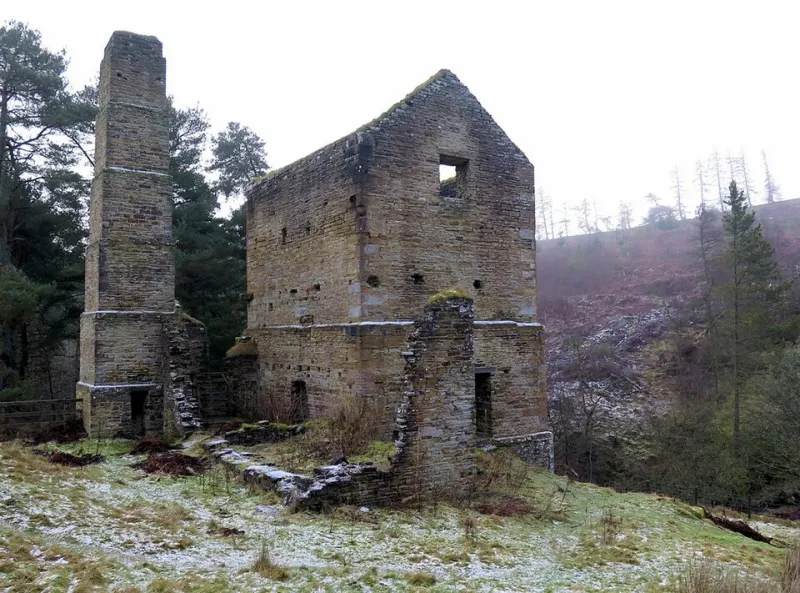
Photo: Andrew Curtis , CC BY-SA 2.0, via Wikimedia Commons
On a wet morning at Pool, a few miles west of Redruth, the most interesting number on the site is not on a meter but on a thermometer. Water drawn from a flooded former tin working arrives at the surface at roughly 14C in January, when the air above it is hovering near freezing. It is not hot enough to warm a radiator on its own, and it never will be. But it is warm enough, consistently enough, for a heat pump to work at an efficiency that an air-source unit struggles to match in a Cornish gale.
That modest thermal advantage is the whole basis of the mine water heat proposition now being studied and, in a handful of places, built across the former mining districts of Cornwall. The county has no gas grid for a large share of its housing stock, and holds one of the oldest and least efficient domestic building fabrics in England. It also has an estimated hundreds of kilometres of flooded underground workings — adits, shafts and stopes — acting as a vast, slow-moving thermal reservoir that nobody has ever billed for.
What the workings actually hold
Flooded mine voids behave unlike almost any other heat source. Rock at depth holds a near-constant temperature, and the water in contact with it settles into a narrow band — commonly somewhere between 12C and 18C in UK workings, warmer in summer and cooler in winter than the air above. Because the volume of water and rock is so large, abstraction over a heating season barely shifts it, provided the water is returned underground rather than discharged.
That stability is the key. An air-source heat pump on the north Cornish coast may see its coefficient of performance fall towards 2.5 during a cold, humid spell. A well-designed mine water system operating on a 14C source can plausibly hold a seasonal figure closer to 3.5 or 4 — meaning around a third less electricity for the same heat delivered. In a county with high levels of fuel poverty and a large off-gas-grid population, that difference is not academic.
The technology, stripped of jargon
A mine water scheme is, at heart, three pieces of engineering in a line. First, an abstraction borehole or adit connection draws water from the flooded workings at a controlled rate. Second, a heat exchanger on the surface skims the low-grade heat from that water into a closed loop of refrigerant or secondary fluid, leaving the mine water a few degrees cooler. Third, a heat pump lifts that heat to the 45–55C needed by conventional radiators, or higher where a high-temperature unit is specified for an older building.
The cooled mine water is then reinjected into the workings, usually via a second borehole set far enough away to avoid short-circuiting, or discharged under an Environment Agency consent. Reinjection is generally preferred: it maintains the aquifer's pressure and heat balance, and it avoids the visual and chemical questions that come with a surface outfall.
Where a scheme serves more than one building, a heat network is added — insulated pipes carrying warm water to homes, a school, a leisure centre or a public building, with individual heat pumps or heat interface units at each property.
The Cornish complication
County Durham's celebrated mine water schemes draw on relatively benign, moderately mineralised water. Cornwall's geological inheritance is less forgiving. Many of the county's workings are mineral-rich, with elevated iron, manganese and sulphate concentrations, and several are in hydraulic continuity with the sea — a legacy of workings driven out beneath the seabed off Gwennap and St Just. Saline or metal-laden water raises the cost of exchangers, filters and corrosion protection, and can add a treatment step that erodes the business case.
There is a second, quieter problem: the map is incomplete. No one has a reliable model of how voids connect, how much water they hold, or where the old stopes sit beneath a proposed housing site. The risk of subsidence, mine gas and unexpected drawdown means that any scheme begins with investigation — drilling, logging, pumping tests, water sampling — before a single pipe is laid. Consultants in the field routinely describe the first borehole as a research project rather than a construction task.
Costs, and what the pilots suggest
Indicative figures circulating around early-stage Cornish studies put a borehole pair and headworks in the low hundreds of thousands of pounds, with network costs of several thousand pounds per connected dwelling on top. Against that, a heat network serving a few hundred homes spreads the capital across enough customers to compete with the alternative many households actually face: a kerosene boiler, a tank replacement, and a fuel price they cannot control.
Where the economics look strongest is not in sparse rural hamlets but in the dense former mining settlements — Camborne, Pool, Redruth, St Day, Chacewater — where terraces sit close together, several large public buildings sit within a few hundred metres, and the old workings lie directly beneath the streets. Cornwall Council's carbon ambitions and the drive to retrofit social housing give such schemes an anchor customer, which is usually the difference between a feasibility report and a delivered network.
The policy backdrop has also shifted. Heat network zoning, introduced through the Energy Act 2023, and Ofgem's growing role as regulator of heat networks give local authorities a framework that did not exist a decade ago. The Boiler Upgrade Scheme continues to part-fund individual heat pumps, but it is poorly suited to networked solutions; the more relevant question is how capital support for shared infrastructure is allocated after the current spending review period.
Where it can realistically replace oil
The honest answer is: on streets, not on moors. A mine water network needs a concentration of demand to be viable, and much of Cornwall's off-gas housing is scattered along single-track lanes where the connection cost per home would be prohibitive. The realistic geography of mine water heat in 2026 is a handful of settlements with dense terraces, public buildings and a documented void beneath them — plus, potentially, a new generation of housing on brownfield land where the boreholes can be drilled before the houses are built rather than after.
Warm water underground will not solve Cornwall's cold homes on its own. Insulation, glazing and fabric work remain the cheapest unit of heat ever delivered. But as a replacement for the oil tank in a former mining town, the resource underfoot is the most promising, and least visible, energy asset the county has.