Tide, Turbidity and Title Deeds: The Hard Questions for Severn Blue Carbon
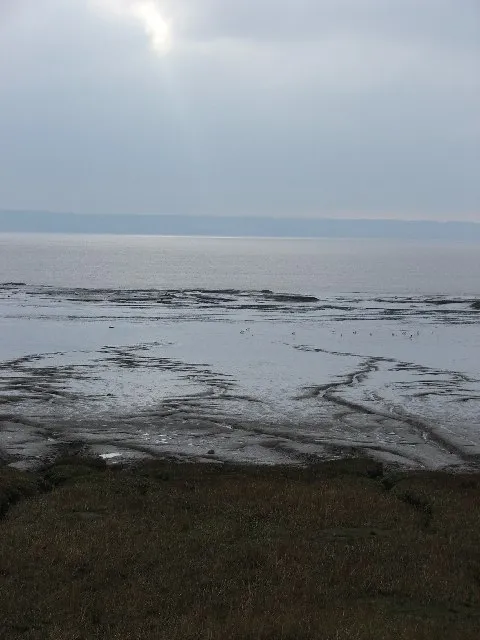
Photo: Jim Mitchell, CC BY-SA 2.0, via Wikimedia Commons
Along the Severn Estuary, the case for saltmarsh restoration is usually made in the language of flood defence, wildlife and landscape. Increasingly, it is also made in the language of carbon. Mudflats and marshes that fringe the Somerset coast, the Gloucestershire shore and the wider Severn corridor are being discussed as potential sources of blue-carbon credits, sold to businesses seeking to offset emissions they cannot yet remove.
The attraction is obvious. Saltmarsh vegetation traps sediment, and the anoxic mud below stores organic carbon over long periods. Restored marsh can also reduce wave energy, support wading birds and provide a natural buffer as sea levels rise. For a region with extensive low-lying farmland and several struggling coastal communities, the idea of attaching a revenue stream to habitat creation is politically attractive.
But a carbon credit is not a moral reward for good ecology. It is a tradable claim about an additional, measurable and permanent change, backed by evidence and legal rights. On that test, the Severn saltmarsh market is still at an early and uncertain stage.
Why saltmarsh is not a forest
Woodland carbon has become the reference point for many nature markets, but saltmarsh behaves differently. Carbon is held less in living biomass than in sediment, and the rate of accumulation depends on tide, turbidity, plant cover and the pace of sea-level rise. A marsh that builds vertically may keep storing carbon; one that is squeezed against a sea wall may drown or erode.
That makes baselines difficult. A project must show what would have happened without intervention, not merely that a site is wet and green. If a marsh was already accreting before a restoration scheme began, the carbon gain may be smaller than the headline area suggests. If the scheme mainly protects existing marsh from erosion, the claim is closer to avoided loss than to new removal.
Permanence is equally awkward. Saltmarsh is dynamic by nature. Storms shift creeks, sediments move, and coastal management decisions can alter the future of a site decades after a credit is issued. Buyers will want assurance that a credit represents carbon kept out of the atmosphere for a defined period, with buffers or replacement arrangements if a site fails.
The Severn as a test bed
The Severn is a useful place to test these questions because it already hosts large-scale habitat work. Managed realignment at Steart Marshes and other schemes around Bridgwater Bay have shown that intertidal habitat can be created, though outcomes vary. The estuary’s huge tidal range and turbid water make it productive, but also hard to monitor cheaply and consistently.
Many of these projects were funded for flood risk management and conservation, not for carbon. That raises an additionality problem. If a marsh would have been restored anyway with public money, can the same hectares be sold as carbon credits? The answer depends on how the scheme’s funding and baseline are defined. A credible market needs to avoid paying twice for the same action, once through public grants and again through corporate offsetting.
There is also a question of scale. Individual saltmarsh sites are small compared with woodland estates, and monitoring costs can swallow a large share of revenue. Aggregation across several landowners may be necessary, but it adds another layer of contracts, data sharing and liability.
Who owns the mud?
Carbon rights are not automatically attached to land ownership in the way that minerals or timber may be. On the Severn, ownership of intertidal land is often split between the Crown Estate, the Environment Agency, wildlife trusts, local authorities and private estates. Tenants, commoners and neighbouring farmers may also have interests.
Before a credit can be sold, someone must be able to demonstrate the right to sell it. That means clear title, landlord consent where tenancies apply, and long-term covenants or management agreements that bind future owners. A restoration scheme might be ecologically sound and still fail commercial due diligence because the carbon rights are ambiguous.
This is not a peripheral legal detail. It determines who receives the money and who carries the risk if a site erodes or a management obligation is broken. If carbon finance is to support local conservation, the revenue-sharing arrangements need to be transparent from the outset rather than negotiated after credits have been sold.
What an auditor would ask
A rigorous saltmarsh credit in 2026 would need to answer several questions. What is the baseline, and how was it measured? Is the carbon gain additional to existing policy and funding? How long must the habitat be maintained, and what happens if it migrates or erodes? How will leakage be checked, so that restoration in one place does not simply displace damaging activity elsewhere? Which registry will track the credit, and how will double counting be prevented?
The emerging voluntary codes for saltmarsh carbon are beginning to address some of these points, but they are not yet a substitute for statutory regulation. Verification bodies will need ecological, hydrological and legal expertise. Remote sensing can help with extent and vegetation, but sediment carbon still requires sampling. Standard methods are improving, yet they remain costly for small projects.
The finance question
Blue-carbon credits are often presented as a way to bring private money into nature recovery. That is plausible, but only if the price is high enough to cover monitoring, legal work and long-term management. Cheap credits risk becoming a reputational liability for buyers and a poor deal for landowners. Expensive credits may struggle to find buyers in a crowded offset market.
The better use of carbon finance may be as a modest top-up to publicly funded restoration, not as the main justification for a scheme. That would keep the emphasis on flood defence, biodiversity and adaptation, with carbon revenue as a secondary benefit. It would also reduce the pressure to overstate carbon gains in order to make a project viable.
A cautious verdict
The Severn’s saltmarshes are genuinely valuable. They store carbon, slow waves, support wildlife and form part of the region’s coastal identity. But the credibility of a blue-carbon market will depend less on enthusiasm than on audit trails: clear baselines, defensible ownership, independent verification and honest accounting for risk.
In 2026, the South West has an opportunity to get this right before the market hardens around weak practices. A Severn saltmarsh credit that survives the audit would be a useful model for the UK. One that does not would simply add another layer of uncertainty to the mud.