Plastic Grass, Real Water: Why South West Planners Should Say No to Artificial Lawns
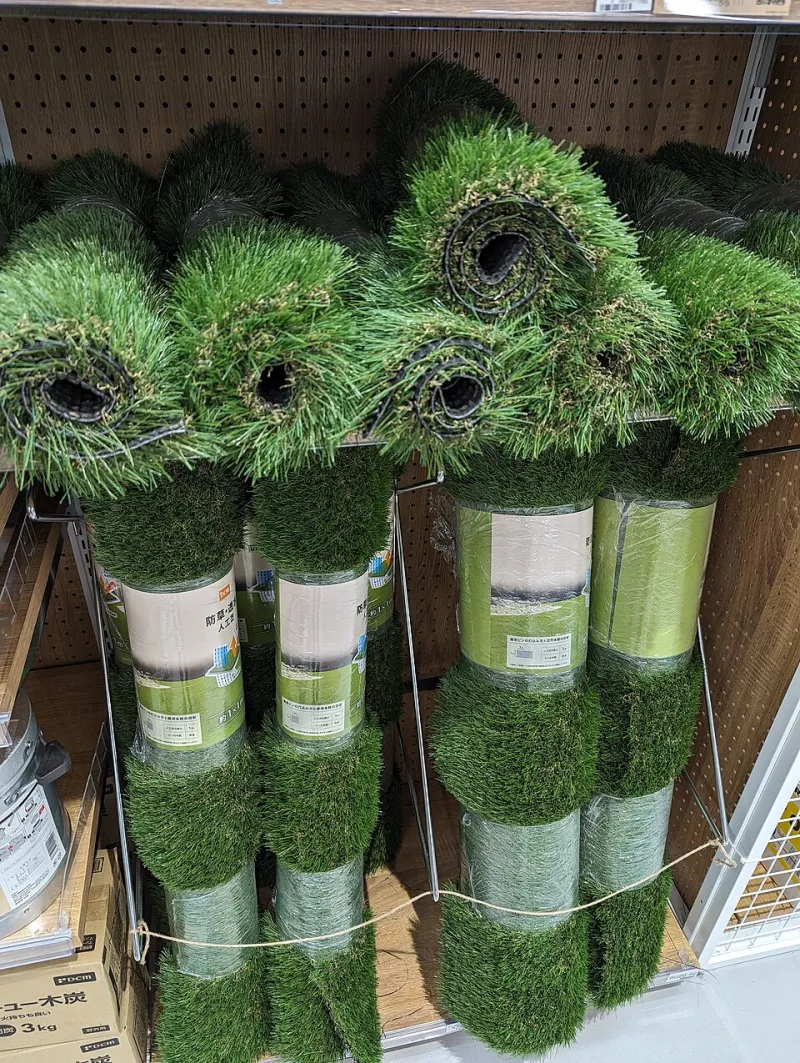
Photo: Syced, CC0, via Wikimedia Commons
There is a moment in many new-build gardens when the turf arrives on a roll. It is green, uniform and, for a householder tired of mud, immediately satisfying. But in a region defined by wet winters, steep lanes and a coastline under pressure, that roll of plastic is not a neutral lifestyle product. It is a small piece of hard infrastructure with public consequences.
A Garden Choice With Public Consequences
The argument against artificial grass is not that every plastic lawn causes a flood. It is that thousands of small, impermeable surfaces add up. In the South West, where rainfall can be intense and soils are often heavy, the cumulative effect matters. A garden that once absorbed rain now sheds it, usually onto a driveway, a lane or a surface-water drain that was not designed for the extra load.
Planning authorities already consider drainage for new developments. They consider biodiversity net gain, flood risk and sustainable drainage systems. Yet artificial turf often slips through as landscaping, a finish rather than a land-use decision. That is the gap. If a planning application proposes a plastic lawn across a front garden, a communal courtyard or a show-home garden, it should be assessed as a drainage and ecology issue, not waved through as a private aesthetic choice.
Drainage, Not Decoration
The South West has a long history of living with water. Somerset's levels depend on careful management of ditches and rhynes. Devon's steep towns have learned to respect surface-water flow. Cornish coastal villages watch how quickly a downpour reaches the sea. In each setting, permeable ground is part of the infrastructure.
Artificial turf is typically laid over a compacted sub-base. It may drain through perforations, but it does not support the soil structure, root growth and invertebrate life that help a real lawn absorb and slow water. In a flood-prone garden, replacing grass with plastic can shift the problem to a neighbour or a highway drain. That is a legitimate planning concern, especially where new-build landscaping is conditioned or where extensions and hardstandings are already increasing runoff.
The Biodiversity Ledger
The biodiversity case is equally practical. A real lawn, even a modest one, is not a wildlife haven by default. But it can become one with clover, daisies, moss and a less obsessive mowing regime. Artificial grass supports almost nothing. It does not flower, seed, host caterpillars or feed birds. It also heats up in summer, adding to the urban heat island effect that is beginning to register in South West towns.
For planners, this matters because biodiversity net gain and local nature recovery strategies are not abstract. They depend on a mosaic of ordinary spaces: gardens, verges, school grounds and allotment edges. A presumption against artificial turf in new developments would not ban every plastic lawn in the region. It would simply make clear that a garden is part of the local ecological network, not a disposable surface.
Coastal and New-Build Pressures
The coastal context sharpens the case. In Cornish villages and Devon estuaries, gardens are often close to the water. Artificial turf can shed microplastics and shreds of backing as it ages. It can also be difficult to remove without disturbing contaminated sub-base. When a garden is exposed to salt, wind and runoff, the material's lifespan is shorter than the brochure suggests.
New-build estates present a different problem. Landscaping is often installed quickly, before residents arrive, and artificial turf is an easy way to deliver an instant green frontage. But these are exactly the gardens where sustainable drainage, tree planting and permeable surfaces should be designed in from the start. A regional planning presumption would give developers certainty: if you want to market a green garden, make it a living one.
A Practical Presumption
This is not a call for a blanket ban on all artificial surfaces. There are legitimate uses: accessible play areas, balcony gardens, sports surfaces and some commercial settings where wear is extreme. The case is for a presumption against artificial grass in residential gardens and open landscaping, especially where it replaces soil or connects to surface-water systems.
Planning authorities could implement this through local plan policies, supplementary planning documents, validation checklists and conditions on new-build landscaping. They could require a drainage statement for any proposal that replaces permeable garden with impermeable surface. They could encourage native turf, clover lawns, gravel gardens, rain gardens, sedum roofs and permeable paving. None of these is novel. All are better suited to a wet, windy region.
What Good Looks Like
A good South West garden in 2026 does not have to be wild or expensive. It needs to hold water, support some life and be easy to live with. A lawn that browns in summer but recovers in autumn is doing its job. A gravel border with drought-tolerant plants is doing its job. A rain garden that takes the roof runoff away from the back door is doing its job.
Plastic grass does a different job. It delivers a photographic finish and pushes the water somewhere else. In a region already adapting to wetter winters, hotter summers and a coastline on the move, that is not a neutral choice. It is a planning decision. South West authorities should treat it as one.