Coarse Fleece, Warm Walls: The Supply-Chain Test for Devon’s Wool Insulation
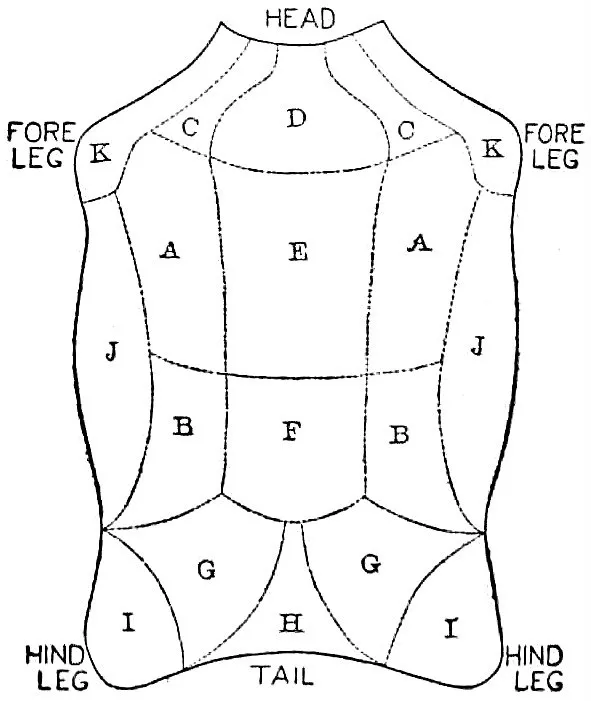
Photo: Bowman's Structure of Wool Fibre, Public domain, via Wikimedia Commons
On the eastern edge of Dartmoor, the fleece that comes off a hill ewe in early summer is rarely the stuff of knitwear. It is coarse, often dark or kempy, and too variable for the textile trade to prize. For many upland farms it has become a by-product with a weak market, sometimes worth less than the cost of shearing and packing. A pilot now running across Devon and Somerset is asking whether that low-grade wool can be redirected into something the region needs in quantity: insulation for walls, roofs and floors.
The idea is not new in principle. Wool has a long history as a building material, and several UK companies already sell wool-based insulation. What is being tested here is a regional supply chain — whether fleece from South West hill flocks can be collected, processed and returned to local retrofit projects at a price and consistency that make sense beyond a demonstration project. In 2026, that question matters more than ever, as homeowners and social landlords look for lower-carbon alternatives to petrochemical foams and mineral wools.
From moorland shearing to the test rig
The pilot begins with collection. Wool is bulky and light, so transport quickly eats into value. Participating farms are being asked to pack fleece in a way that suits onward processing, separating the very coarse or contaminated material that would undermine a consistent insulation bat. Organisers say the early lesson is logistical rather than technical: the fleece exists, but the infrastructure to gather it efficiently from scattered upland holdings does not yet exist at scale.
From the farm, the material moves to a processing route where it is washed, carded and formed into batts or loose-fill. For insulation use, wool usually needs treatment against fire and pests, often with borate-based salts. That treatment is well established, but it adds cost and requires careful control. The pilot is examining whether South West fleece can meet the same performance standards as wool sourced from larger, more uniform flocks elsewhere.
At a test rig in Devon, samples are being assessed for thermal conductivity, moisture behaviour and fire performance. Wool’s hygroscopic nature — its ability to absorb and release water vapour — is often presented as an advantage in older buildings, where breathability matters. But moisture also brings risk if detailing is poor, and the pilot is looking at how wool behaves when wetted, dried and repeatedly cycled. Fire testing is equally important: untreated wool can smoulder, and any insulation product must satisfy building regulations.
The cost question and the retrofit market
The commercial case is harder to pin down. Wool insulation typically carries a premium over glass mineral wool and rigid foam boards. In a new-build project that premium may be absorbed, but in the retrofit market — especially among households on modest incomes — cost is decisive. The pilot is therefore testing not just whether wool works, but whether a regional product can be priced close enough to mainstream alternatives to attract volume.
Demand-side interest is real. The South West has a large stock of older stone and cob buildings, many of which are hard to insulate with conventional materials without trapping moisture. Wool’s breathability is attractive in principle, though it is not a universal solution. The pilot is working with a small number of retrofit projects to see how wool batts perform in practice, including in irregular wall cavities where cutting and fitting matter as much as the material itself.
For farmers, the appeal is a new market for a product that has struggled to find one. Wool prices have been volatile for years, and the coarse fleece from hill breeds has few high-value outlets. If a regional insulation chain could pay a reliable price per kilogram, even a modest one, it would change the economics of shearing for some upland businesses. But the pilot is careful not to overpromise. The volumes needed by the building trade are large, and the fleece from a single farm is small.
Scaling beyond the niche
The central risk is that wool insulation becomes a green premium product — desirable for a few self-builders and heritage projects but irrelevant to the mass retrofit market. To avoid that, the pilot needs to demonstrate three things: consistent quality, a workable collection network, and a price that does not rely on permanent subsidy.
Processing capacity is a bottleneck. The UK has limited facilities for turning raw fleece into insulation, and the pilot is relying on existing plants rather than building new ones. That limits how much material can be handled and makes transport distances longer than a truly local chain would ideally require. Organisers are examining whether smaller-scale processing, perhaps using mobile or regional equipment, could reduce costs and keep more value in the South West.
There is also the question of specification. Builders and retrofit coordinators are conservative for good reason: they need products with predictable performance and certification. Wool insulation has a track record, but a regional supply chain must prove that its output is consistent enough to be specified with confidence. The pilot is compiling test data that could support that case, though it will take time.
For now, the trial is a useful test of a familiar rural idea: turning a low-value by-product into a local resource. If it works, it could give hill farmers a modest new income stream and offer the region’s retrofit market a lower-carbon material with a shorter supply chain. If it does not, the fleece will continue to be a costly inconvenience — and wool insulation will remain a niche product for those who can afford it.