The Long Bank: Can Cornwall’s Hedges Earn Their Keep as Climate Infrastructure?
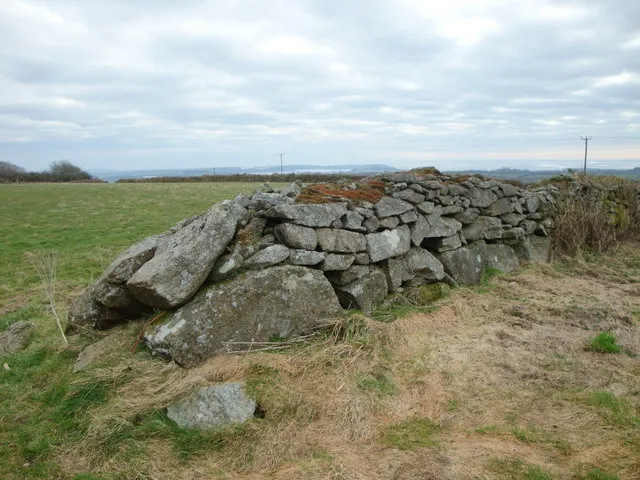
Photo: Graham Loveland, CC BY-SA 2.0, via Wikimedia Commons
Cornish hedges are easy to overlook because they look inevitable. An earth bank faced with stone, topped with thorn, hazel or beech, they run across fields and lanes like a piece of the county’s geology brought into order. But a hedge bank is not a passive boundary. It intercepts rainfall, slows overland flow, traps sediment, stores carbon in soil and woody growth, and provides shelter and shade for livestock. In a county facing wetter winters, sharper summer heat and pressure on farm incomes, those functions look less like countryside decoration and more like climate infrastructure.
The question for 2026 is whether public payment systems can treat them that way. Environmental land management in England has moved from pilot to practice, with the Sustainable Farming Incentive, Countryside Stewardship and a growing array of capital grants sitting alongside local nature recovery strategies and biodiversity net gain. On paper, hedges fit. In practice, the economics of maintaining a stone-faced bank are awkward, and the gap between grant rules and farm reality is where the argument now sits.
A boundary with a job description
A Cornish hedge is a composite structure. The earth core gives it mass and drainage; the stone facing holds it together; the hedge plants on top bind the bank and provide habitat. These are not the clipped hawthorn rows of lowland England, although they do similar work. They are thicker, rougher and more dependent on skilled repair. When a bank collapses, the fix is not a matter of planting whips and moving on. It requires stone, labour and knowledge of how to lay a face that will stand up to weather and stock.
The climate case is straightforward. A well-maintained bank can slow water moving downslope, reducing the risk of localised flooding and soil loss. It can provide shade and shelter that help livestock cope with heat stress, a concern that has become more familiar in the South West. It can sequester carbon in soil and biomass, although the quantities are modest per metre and difficult to measure precisely. And it supports biodiversity by linking habitats across a farmed landscape.
That combination ought to make hedges a natural target for climate adaptation funding. The difficulty lies in the word “maintenance”.
What the schemes pay for — and what they miss
Current agri-environment offers generally recognise hedgerows as features to be managed. There are payments for hedge cutting, gapping up and, in some cases, restoration. Capital grants can support planting and boundary work. But the stonier side of a Cornish hedge — rebuilding a collapsed face, repairing a bank after stock damage, replacing a section lost to a gateway — does not always sit comfortably within standard prescriptions. The work is skilled, variable and expensive, often quoted at tens of pounds per metre rather than a flat per-hectare rate.
There is also an evidence burden. Agreements tend to require records, maps and a commitment over several years. For a small farm with a few hundred metres of hedge, the transaction cost of entering a scheme can outweigh the payment. For a larger estate, the issue is different: the payment may cover the routine work but not the heavy repair that keeps a bank functioning. The result is a familiar mismatch. Planting new hedges attracts attention and capital; repairing old ones is less visible and harder to fund.
That matters because the climate value of a hedge depends on condition. A gappy, slumped bank does less to slow water and shelter stock than a sound one. Paying only for establishment risks rewarding the easy metric — metres planted — while the existing network quietly degrades.
The carbon question
Farm carbon audits are becoming more common, and hedges usually appear in them as a carbon stock. But calculators vary in how they treat boundary features, and the numbers are often based on broad averages. The carbon stored in a hedge bank is real, but it is not easily traded. A farmer cannot sell a tonne of carbon from a hedge with the same confidence as, say, a woodland scheme with recognised standards.
That does not make carbon audits useless. They can help farmers see hedges as part of the farm’s asset base rather than an overhead. But carbon income alone is unlikely to fund a stone bank rebuild. The more plausible route is a blend: agri-environment payments for management, capital grants for repair, and advice to help farmers target the hedges that do most for water and shelter. Carbon should be a supporting argument, not the business case.
Biodiversity targets and local evidence
Cornwall’s local nature recovery work gives hedges a role as wildlife corridors, and biodiversity net gain creates a demand for habitat improvements. In principle, that could bring new money into hedge restoration. In practice, off-site credits tend to favour larger, more measurable projects. A network of field banks is valuable, but it is diffuse and hard to package.
Better mapping would help. Councils, farm groups and conservation bodies need to know where hedges are, what condition they are in and where they connect. Some of that information can come from satellite data and farm records; some will need walked surveys. Citizen science has a part to play, particularly in recording hedge condition and wildlife use. Without that evidence, payment schemes will continue to rely on blunt standards.
The rebuild gap
Underneath the policy language is a practical problem: skills and labour. Hedge laying and stone facing are specialist trades. Contractors are booked months ahead, and not every farm has the equipment or manpower to rebuild a bank. Grant rules that require match funding or upfront payment can exclude the smaller holdings that make up much of Cornwall’s farmed landscape. Tenanted farms face an additional barrier: the landlord may own the hedge, but the tenant manages it.
A payment system that values hedges as climate infrastructure would need to address those realities. That could mean revenue-style payments for maintenance rather than capital-only grants, simpler application routes, and standards that recognise the Cornish hedge as a distinct structure. It would also mean accepting that the climate benefit is often local — a field corner that stops a track washing out, a bank that gives stock shade — rather than a tradable global commodity.
What to watch in 2026
The argument is not whether Cornwall’s hedges are useful. It is whether the money follows the work. In 2026, the tests are concrete: whether updated environmental land management offers cover bank repair, whether local nature recovery strategies translate into targeted funding, and whether farm carbon audits give hedges a credible place without overselling them. If those tests are met, the Cornish hedge could become a model of small-scale climate adaptation. If they are not, the county’s long banks will keep doing their quiet work while the balance sheet looks the other way.