Phosphate by the Kilogram: Can the South West’s Nutrient Credit Market Prove Itself?
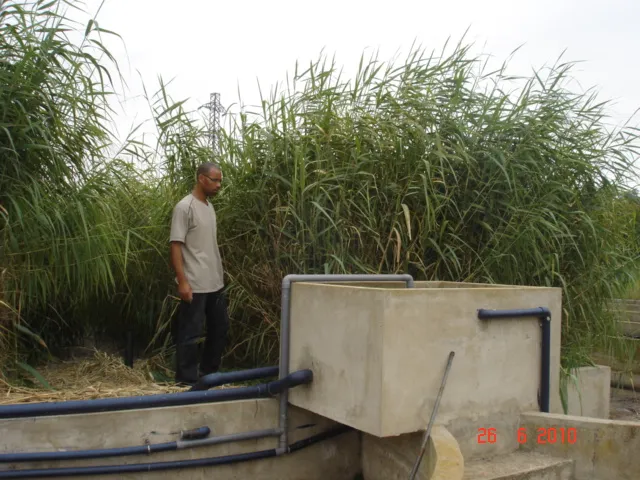
Photo: SuSanA Secretariat, CC BY 2.0, via Wikimedia Commons
For housebuilders in parts of Somerset, Devon and Cornwall, the practical question is no longer simply whether a site has outline permission. It is whether the scheme can show that the additional phosphate it would generate has been matched, kilogram for kilogram, by measures elsewhere in the catchment. That requirement—nutrient neutrality—has quietly created a market in phosphate credits, with wetlands, woodlands and farm interventions now sold as environmental mitigation for new development.
The principle is straightforward. Protected sites such as the Somerset Levels and Moors, along with vulnerable river catchments, are sensitive to excess nutrients. Natural England’s advice to local planning authorities has meant that new residential development in affected areas must not add to the nutrient burden. Developers can meet that test through on-site measures, but often they cannot. The alternative is to buy credits from off-site schemes that reduce phosphate entering the water environment.
In 2026, that market is no longer a novelty. It has become part of the development economics of the region. Yet it remains a market in search of a convincing audit trail. The central question is not whether credits are being bought and sold. It is whether the resulting reductions are additional, permanent, measurable and enforced.
A market built on a planning condition
Phosphate credits are not a commodity in the ordinary sense. They are derived from planning obligations and catchment rules. A developer facing a nutrient neutrality requirement may purchase credits generated by a wetland creation scheme, a woodland planting project or a package of farm measures designed to intercept and retain nutrients before they reach a river.
The schemes vary widely. Constructed wetlands can provide a measurable treatment function, capturing phosphorus in sediment and vegetation. Woodland creation can reduce agricultural runoff and stabilise soils. Farm interventions—buffer strips, slurry storage improvements, changes to stocking or fertiliser use—can lower phosphate losses at source. Each has a different evidence base, a different lifespan and a different relationship to the landowner’s existing practices.
That variety is both a strength and a weakness. It allows mitigation to be tailored to local catchments, but it makes the market difficult to compare. A credit sold from a wetland is not necessarily equivalent to a credit sold from a changed farming practice. The units may be the same on paper, but the confidence attached to them is not.
Where the money goes
For landowners and farmers, nutrient credits can look like a new income stream. For developers, they are a cost of doing business. For councils, they are a regulatory burden that must be administered without becoming a reputational risk.
The money does not flow in a single direction. Some credits are generated by private schemes working with developers. Others are brokered through intermediaries or delivered by environmental organisations. Local authorities must decide whether the schemes offered are credible, whether the calculations are sound and whether the mitigation will last at least as long as the development’s impact.
That last point matters. A housing scheme may endure for a century. A wetland may silt up, a woodland may be felled or a farm agreement may lapse. The market needs mechanisms to ensure that credits are not simply promised but maintained. In practice, that means monitoring, legal covenants, contingency funds and clear responsibility when something goes wrong.
Farmers are right to ask what the credits mean for their business. A nutrient credit scheme can reward land management changes that reduce pollution, but it can also lock land into long-term obligations. The price paid per kilogram must reflect not only the cost of the measure but the opportunity cost of the land and the risk of future regulatory change. Where those calculations are opaque, trust in the market suffers.
The measurement problem
Phosphate is not easy to count. It moves with soil, water and weather. A scheme that performs well in a dry year may perform differently in a wet one. A wetland that removes phosphorus in summer may release it under different conditions. Monitoring at the outlet of a scheme is not the same as proving that the protected site has been spared the nutrient load.
This is the technical heart of the debate. Nutrient credit schemes often rely on models, assumptions and calculated reduction rates. Those methods can be defensible, but they are not self-evidently correct. The market depends on regulators, local authorities and developers agreeing on what counts as a real reduction.
In 2026, the South West still lacks a single, publicly accessible ledger showing how many credits have been generated, where they have been used, how much phosphate they are expected to remove and how that performance is being checked. Without such transparency, it is difficult for communities to know whether the market is delivering cleaner rivers or simply moving a planning problem around the map.
The price of a cleaner river
The cost of credits feeds into the price of new homes. Developers will pass on mitigation costs where they can, and in areas where nutrient neutrality applies, that cost can influence viability. This is not a reason to abandon the policy. Excess phosphate damages protected habitats and water quality, and the polluter-pays principle is sound. But it is a reason to scrutinise whether the market is delivering value for money and environmental gain in equal measure.
There is also a distributional question. If credits are generated on large estates or through intermediaries with specialised expertise, smaller farmers may be left out. If credits are concentrated in a few catchments, competition may be limited. Councils, meanwhile, must avoid approving schemes that look robust in a planning file but weak in the field.
What would make the market credible
A credible phosphate credit market would rest on several foundations. Additionality must be demonstrable: the reduction should not have happened anyway. Permanence must be secured through long-term agreements and monitoring. Measurement must be consistent and open to independent scrutiny. Enforcement must be real, with consequences when a scheme underperforms.
None of this is beyond the region’s capacity. The South West already has expertise in wetland science, catchment management and farm advice. What it needs is a more disciplined market architecture: published credit registers, standardised calculation methods and clear lines of accountability between developer, landowner, council and regulator.
Nutrient neutrality was never intended to create a complicated financial instrument. It was intended to protect vulnerable places from further harm. The phosphate credit market is now one of the main ways that protection is delivered. In 2026, its legitimacy will depend less on the sophistication of its transactions than on the evidence that the rivers are better off.