After the Lamps Go Out: Dartmoor's First Winter of Measured Darkness
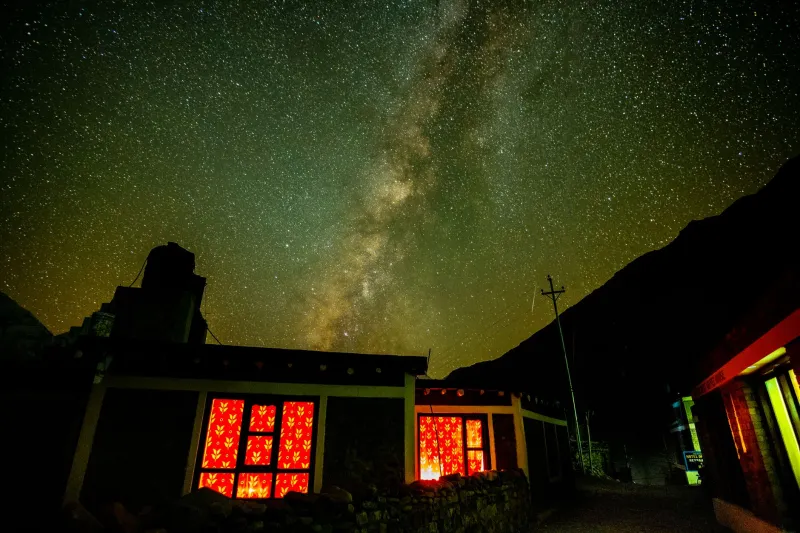
On a clear night above Postbridge the Milky Way is unarguable. That, broadly, is the point. Since Dartmoor was confirmed as an International Dark Sky Reserve in December 2021, the national park has traded on the quality of its night, and the designation has become part of how the moor presents itself to visitors, planners and funders. Less settled is the question of what the darkness is doing for the creatures that evolved under it.
This winter, a small group of volunteers is attempting an answer. Across six sites on the moor's eastern and southern fringes — three close to lit farmyards or village edges, three on unlit lanes — they are running light traps through the colder months, counting moths and recording what turns up and when.
A designation with conditions attached
The dark sky reserve is not a statute. It is a badge awarded by DarkSky International, and its practical force comes through the Dartmoor Local Plan and through planning conditions attached to new development. In recent years those conditions have become noticeably more specific: external lighting schedules, warm colour temperatures, shields and baffles, downward orientation, curfews after a set hour, and a general expectation that a scheme will show why illumination is needed at all.
That is a meaningful shift in a national park where conversions of barns, visitor accommodation and agricultural buildings are routine. But a condition is only as good as its enforcement, and enforcement is the part of the system least visible from outside. The park authority has limited capacity, and much of the lighting that matters most — a yard floodlight, a security lamp over a feed store — predates any policy and sits outside planning control altogether.
"You can condition a new building," says one planning consultant who works across Devon and Somerset and asked not to be named while discussing live applications. "You cannot condition a farmer's existing yard light, and you would struggle to persuade him it is the priority when he is worried about stock."
The trap line
The survey is deliberately modest. Actinic and Heath traps are set on mild, still, overcast nights — conditions that moths favour and volunteers do not. Each trap is run for a fixed period, the catch is identified, counted and released, and the results logged against temperature, wind and cloud cover. The comparison is not between 'good' and 'bad' sites so much as between light regimes: continuous illumination, part-night lighting, and genuine darkness.
Winter recording is a specialised business. The catch is thin and the species are subtle: December moth, winter moth, mottled umber, pale brindled beauty, the early moths that emerge while the rest of the invertebrate world is dormant. But the season has an advantage. With fewer species flying, the recorders can be confident about what they are seeing, and the contrast between a lit and unlit hedge is easier to isolate from the noise of high summer.
What light actually does
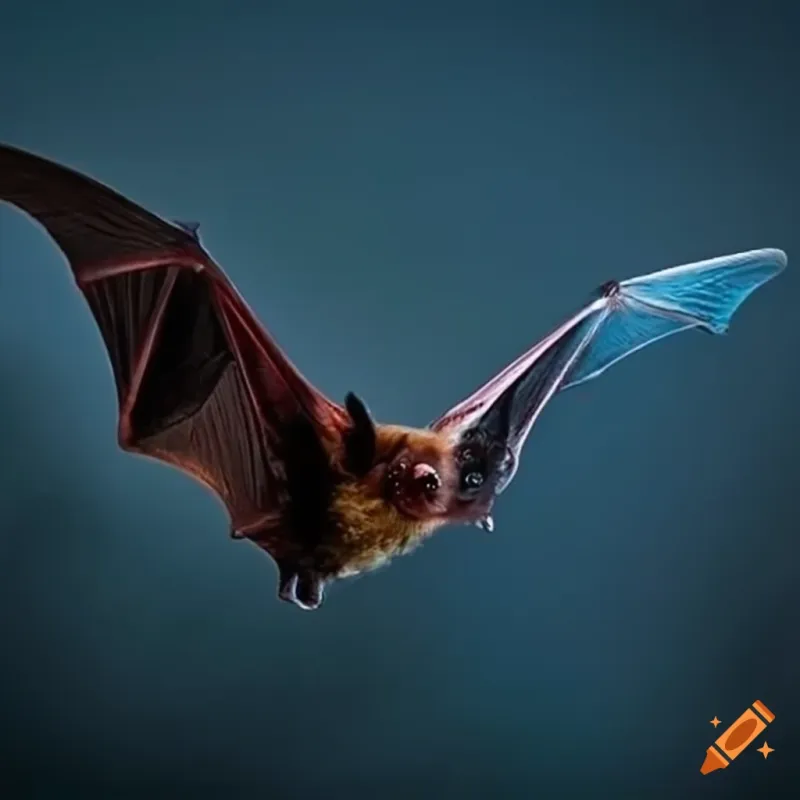
The ecological literature is not ambiguous about the general principle. Artificial light at night draws insects from surrounding habitat, holds them in flight around a source, and exposes them to bats and to exhaustion. For moths specifically, research has documented disrupted mate-finding, altered timing of emergence, and reduced feeding at flowers. The consequence for pollination and for the bats and nightjars that feed on them follows, though the size of the effect in any particular landscape is anything but settled.
Dartmoor's complication is scale. A village edge is not a street-lit city, and much of the moor's dark-sky value comes from being dark in bulk rather than dark at every point. A few lamps in Princetown or Chagford may matter far less than the total absence of light across the high moor — or they may matter more than anyone assumes, because they sit exactly where hedgerows, field margins and water converge.
The awkward half of the argument
Two interests do not fit comfortably into a dark-sky narrative, and both are legitimate.
The first is the working farm. Livestock welfare, insurance requirements and the plain practicalities of calving at two in the morning all point towards illumination. A dark-sky officer can suggest motion sensors, timers and better shielding; a farmer can point out that a sensor which fails to trigger is worse than no sensor at all. Where the reserve designation is felt as an outside imposition rather than a shared interest, compliance tends to be nominal.
The second is the road. Devon's part-night street lighting and the switch-off of some rural columns have been welcomed by astronomers and viewed more warily by drivers. On the B3212 and the lanes between Moretonhampstead and Chagford, headlights are the dominant light source for most of the night, and no curfew applies to them. If dark-sky policy makes visibility harder without reducing traffic speed or improving verges and sightlines, it will struggle to hold public support — and a policy that loses support loses enforcement.
Tourism's dim dividend
The economic case is easier to make. Astro-tourism brings visitors in the shoulder months, when beds are empty and the moor is at its quietest. Guesthouses advertise telescope access; the visitor centre runs stargazing evenings; photographers book around the new moon. There is a real, if unquantified, return on darkness.
That return, though, depends on facilities — car parks that stay open, paths that are safe to walk in the dark, somewhere warm to go afterwards. Each of those comes with its own pressure to light. The reserve's success may depend less on the purity of the sky than on the unglamorous business of designing a car park that can be crossed safely by torchlight.
A first winter, not a verdict
One season of trapping on six sites will not settle anything. The sample is small, the weather confounds it, and the recorders know it. What the survey can do is establish a baseline and a method, so that the questions asked of the reserve in five years' time have something to be asked against.
The more immediate test is administrative. If lighting conditions are being written into permissions but not checked, if curfews are agreed and not observed, the dark sky will still look magnificent from the high moor and quietly erode at its edges. Moths are a reasonable proxy for that erosion, precisely because nobody was looking at them.
Anyone with a trap, a torch and a mild night to spare can join the recording effort through the park's volunteer programme. The next generation of the argument will be built from their notebooks.